This is a guest blog from Gecko, AI-Powered student engagement platform.

AI is no longer just a buzzword reserved for coders and Silicon Valley startups. It’s an everyday tool, one with the potential to transform how student recruitment, outreach, and events teams work across the UK HE sector.
Whether you’re trying to personalise your presentation with local context, reviewing feedback from schools, or juggling hundreds of student queries, AI tools can help you move faster, personalise more, and make smarter decisions. But with so much hype, where do you even begin?
This blog is for you, the HELOA member working in a busy recruitment or outreach role, looking for simple, practical ways to use AI in your work without needing to become a tech expert.
Artificial Intelligence (AI) refers to the ability of machines, especially computer programs, to perform tasks that would typically require human intelligence. Think recognising patterns, learning from data, responding to questions, or generating new content.
Machine learning (ML) is a key part of AI, it allows systems to “learn” from data and improve over time without being explicitly programmed. A great example in HE? You might find your data teams using predictive models to identify students most likely to enrol based on past engagement.
Then there are large language models (LLMs) like OpenAI’s ChatGPT, Anthropic’s Claude, and Google’s Gemini. These are trained on massive amounts of text and can understand and generate human-like language. They’re brilliant at tasks like:
- Drafting copy
- Summarising complex info
- Suggesting ideas
- Translating tone or language
They don’t “think” like humans, but they’re incredibly good at producing plausible, context-aware responses, especially when prompted clearly – more on prompts at the end!
Let’s be honest: parts of your job are repetitive. AI tools can help with:
- Summarising meeting notes from recordings or transcripts, you can even invite them to your meetings. Give a free fireflies account a try! – https://fireflies.ai/
- Drafting first versions of emails, reports, or presentations. You still edit, but it gets you 60% there in seconds.
- Cleaning and reformatting data, such as contact lists, session signups, or event feedback.
🛠️Try this: Ask ChatGPT, “Summarise the following transcript into 3 key points for a team update.” Paste your raw notes. Voilà, an editable summary in seconds.
With limited time and teams, personalising outreach to thousands of students can feel impossible. AI helps by:
- Generating tailored follow-up emails based on a student’s event location or interests.
- Powering chat-bots that answer FAQs about your uni, campus life, or application process, 24/7.
- Testing and refining messaging, such as comparing how different email subject lines might perform.
🎯Real use case: Use AI to write three versions of an open day invite, one for teachers, one for students, and one for parents/supporters. You plug in the right detail and let AI help tailor the message.
AI isn’t just for external work, it’s a powerful personal tutor and brainstorming partner.
- Need help understanding UCAS trends? Ask ChatGPT to explain recent reports in plain English.
- Want a second brain? Use AI to sense-check your thinking or explore creative ideas for your next school visit plan.
- Upskilling? Tools like Claude or Gemini can explain technical concepts like CRM segmentation or AI ethics without the jargon.
Claude is great at helping you get started based on what you want to achieve with suggested areas and topics to fast-track you with anything from strategy documents to food plans!
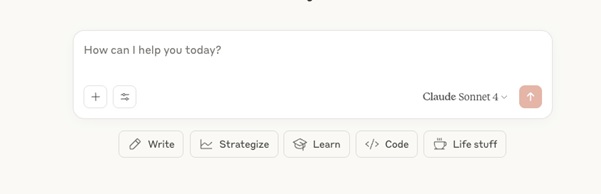
📘Tip: Start with, “I’m new to this. Explain X like I’m five.” You’ll be amazed at how accessible complex topics become
Not all AI tools are created equal. Here’s a quick breakdown of the most common LLMs and when to use them:
|
LLM |
Key Strengths |
Ideal For |
Access |
|
ChatGPT (OpenAI) |
Conversational, reliable, integrates with Microsoft |
Drafting, summarising, brainstorming |
Free & paid |
|
Claude (Anthropic) |
Great at reasoning and tone, very safe |
Sensitive data, nuanced tasks |
Free & pro |
|
Gemini (Google) |
Integrates with Google tools, image understanding |
Google Drive workflows |
Free & pro |
Each tool has its pros and quirks. The best one? The one that fits into your daily workflow. If you’re already using Google Docs, try Gemini. If your uni has Microsoft Copilot, lean into ChatGPT.
Here’s a quick cheat sheet:
|
Task |
Best AI Tool |
Why |
|
Drafting a newsletter |
ChatGPT |
Fast and creative writer |
|
Analysing student feedback |
Claude |
Handles nuance and long text well |
|
Preparing school visit Q&A |
ChatGPT or Gemini |
Fast generation, context-aware |
|
Brainstorming outreach ideas |
ChatGPT |
Flexible, creative |
|
Writing for Gen Z |
Gemini |
Great at tone testing |
Always review the output; these tools suggest, not decide – you always know what is best and if you don’t think it sounds right, then double check and change it!
You don’t need to be a data scientist to use AI. Start by experimenting with one or two small tasks each week, write an email, summarise an event report, or get help brainstorming. Over time, you’ll find where AI adds real value and where your human touch is irreplaceable.
As HELOA members, we’re already experts in communication, empathy, and student experience. AI won’t replace that, but it can enhance and amplify it.
🛠️Want to try something today?
- Perfect your prompts! Spend more time perfecting what you ask and how you ask it to get the very best from AI. You can even ask it what to ask for the best results.
- Test AI on your next email draft or meeting notes
- At your next HELOA regional group share your AI experiences and learn from each other
Let’s explore what’s possible, together.
Written by Jonny AW with excellent assistance from ChatGPT